











On our Start Here page, we outlined the main elements that go into the design of a branded website. One of the most significant elements was finding the right color scheme. Tests have shown that 60-90% of users’ subconscious judgments are made on color alone. Therefore, it is critically important to establish the right color scheme from the beginning.
There are several ways to do this easily:
Those colors should determine the overall look and feel of your website. But what if your branding is out of date or you have none? Where should you begin?
You should begin by considering your industry. Your industry can fall into one of the following categories:
Your next consideration should be your target customer or client. Begin by creating an ideal consumer profile. You will consider their:
Different generations, income groups, and genders have specific color preferences. Knowing who you are marketing to will help you narrow your choices.
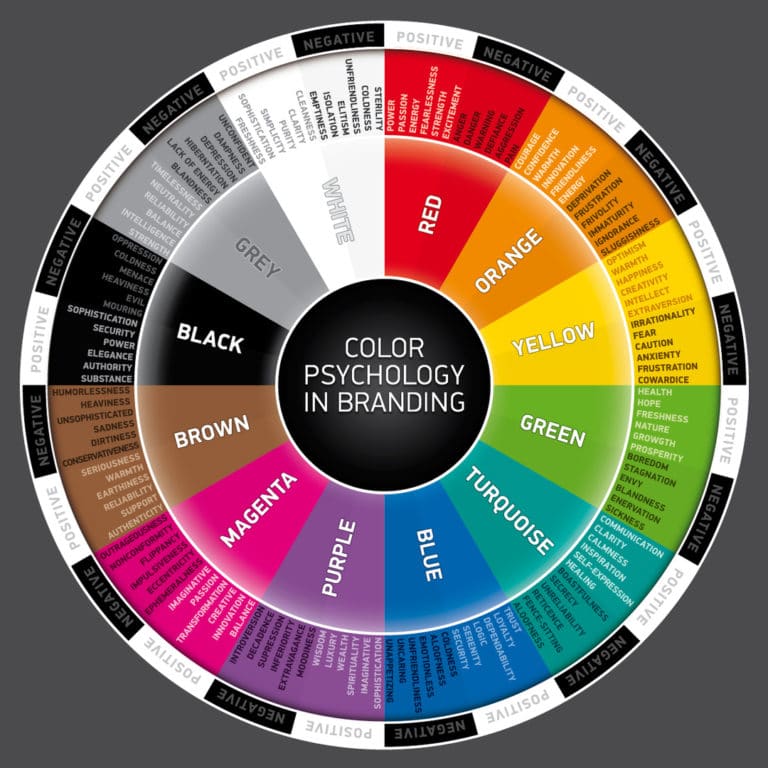
The advertising industry has spent billions researching both the positive and negative aspects of colors, their effects on emotions, and how those emotions influence buyer habits. When designing your website, you will weigh the negative and positive connotations of colors before you make a determination which colors to deploy. Interestingly, since colors come in tints, tones, and shades their impact on our emotions and perceptions can vary greatly.
Let’s take purple as an example. Purple is often used in the beauty / cosmetics industry. Hover to flip for more information. Use this website to find Hex Colors
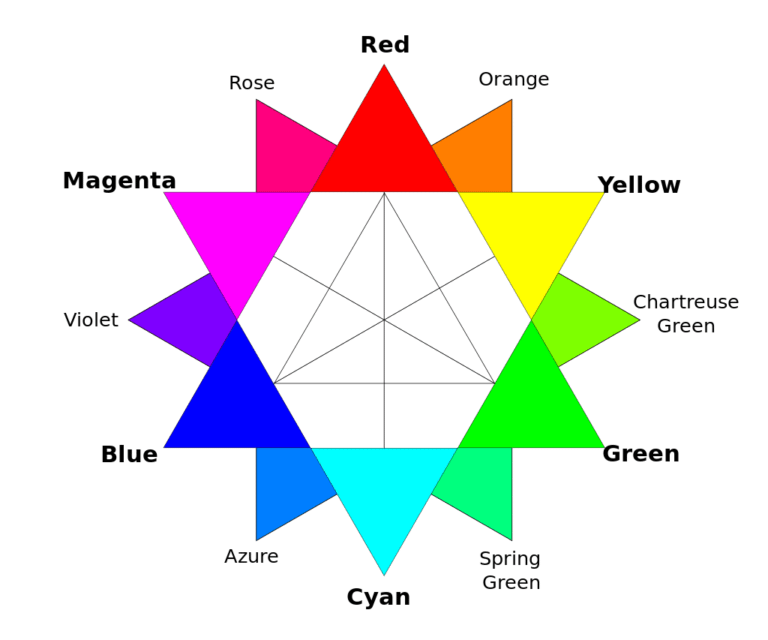
Primary colors are:
Secondary colors – are made by mixing primary colors:
Tertiary colors – are made by mixing primary and secondary colors:
Complimentary colors– Colors that are opposite each other on the color wheel and create high contrast. However, these colors can look garish when used together:
Analogous colors – colors that are next to each other on the color wheel. These color combinations are extremely soothing and used in the correct tint, tones, and shades can look sophisticated and modern.
Triadic colors – are evenly spaced around the color wheel, such as orange, green and purple.
Split complimentary – choose a color, then look at its compliment, then choose the two colors on either side.
Tetradic – two complimentary pairs.
Square – four colors equally spaced around the color wheel.
Monochromatic – uses tints and shades of the same color.
In color theory, white is the absence of color, black is an amalgamation of the three primaries red, blue and yellow. Grey is intermediate between black and white. In the world of pixels, these are approximations. However, these three colors or non-colors, depending on the theory you subscribe to, are incredibly important in the design of your website.
I love them and use them as accents often. I recently finished a website where I used gold metallic as the background color of an entire footer. Metallics, of course, come in shades and tints as well. Though metallics can occur within most colors, true metallics are gold, brass, bronze, silver, copper, and pewter.
Women tend to like softer colors and tints. Men tend to like brighter colors and shades. Reported across the Internet:
Is that actually true? There is a big difference between these colors
Each generation has been found to have particular color preferences.
Boomers – azure, greenish-blue, jade green, grey lavender, sophisticated purples, and silver
Generation X – indigo, violet, shades of green, black, sandy colors and charcoal greys
Generation Z – Cheerful pastels and yellow
Millennials – soft tonal colors, like dusty pink, cantaloupe, blush, lavender and /or bright supersaturated colors
You will be using color on /in your:
There are really no rules to this, but in contemporary design simple is best.
Not necessarily. Whitespace simply means empty space. It can be any color, including black, as long it enhances your images. Whitespace can really pop when you use the lightest tint of your footer or header colors. Cloud is a color that can be used in parts or all of your whitespace. Often, it can set off your images better than plain white.
Sometimes color combinations will be preset and come with your theme but they tend to follow color theory stringently and look commonplace and unattractive. There are also a number of tools you can use to pick colors out of photos or generate color combinations. Whenever you use Color Hexa or a similar site to view a hex color, you will be presented with the shades, tints, and tones of that color in addition to close alternatives to that color and complimentary, analogous, split complimentary, tetradic, and monochromatic color schemes. However, in their purest form, those colors can be too intense or garish, so you must soften them by using tints or tones.
You can get color inspiration from:
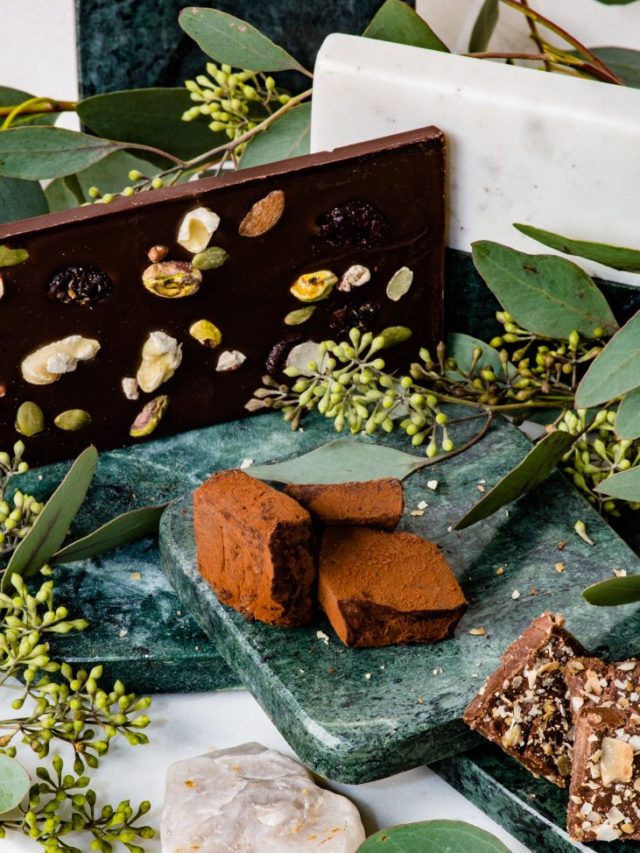
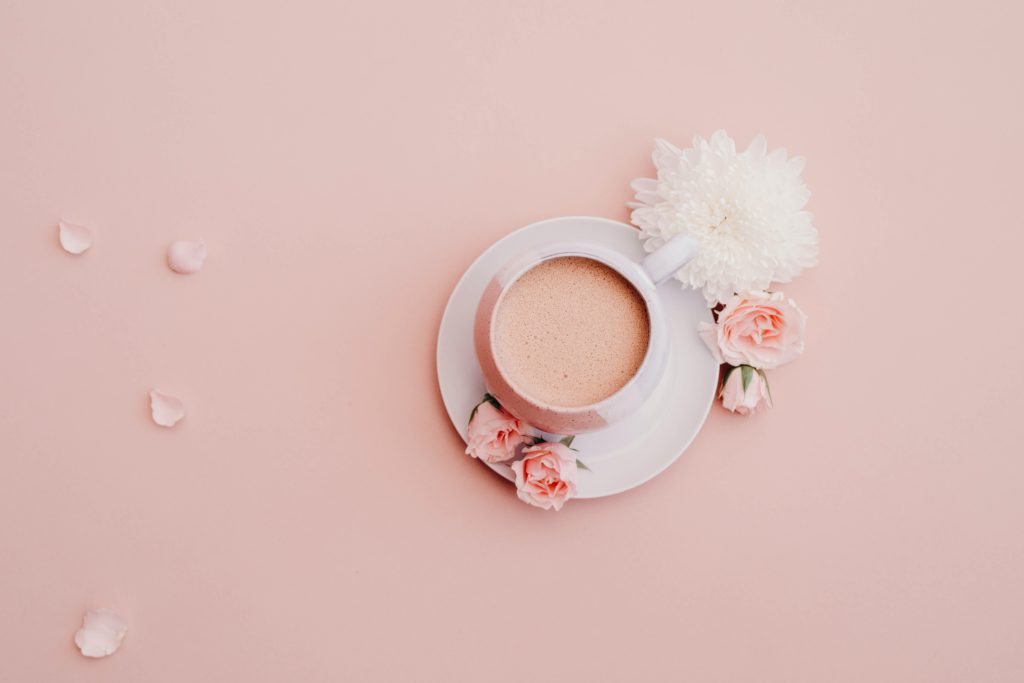
Let’s take a few examples from the coffee and chocolate industry:
So how can we fix this? Which palette can set off brown colors like coffee, tea and chocolate and be inviting without being overwhelming?
Regardless of your industry, you should be using color to enhance your products or images. Don’t fight against them and don’t fall back on grey because you can’t think of anything better.
In 2017, I did a website for a medical spa. Until then, most of the spas websites in Chicagoland featured images of super skinny women in their early 20’s and were primarily styled in shades of blue, because spa = water? In any case, I was the first to implement a palette that sets off all flesh tones and has a sophisticated urban feel. I also used images of women of all races and colors. Though the targeted demographics are Generation X and Boomer women, I used photos of all ages and shapes. Now every medical spa in Chicago is more or less a variation of that website.
All human skin tones have orange as their base. Notice how the website colors harmonize with the photographs.
Branding brings together visual elements, such as:
The colors you choose for your website should be compatible with your imagery and appeal to your customer base. You will need be consistent across your website, logos, social media posts, business cards, mailings and newsletter. Having a brand means having a certain look that is easily recognized as uniquely yours.
Some professions adhere to the same tired colors often enough that they have become clichéd. The typical doctor’s office uses these colors:
The green is a recent addition to medical web design. Generally, medical websites feature the most sterile hues of blue and white. On the one hand they look clean. On the other, they evoke feelings of coldness, depression and anxiety. How do the colors below make you feel? I find them much more soothing.
A couple of years ago I was asked by a nursing service to create a website for its non-profit division that helps people over fifty reinvent themselves in life and work. The principles asked for burnt orange and brown. Fortunately, I managed to convince them those colors signaled nursing home rather than renewal. I went with soft green colors instead. Bright green would have been too youthful but a grey green is much more sophisticated, though it signals regeneration. Interestingly, green is a neutral and can be used to great effect as a background color.
What do business people mean when they say, ‘I want IBM Blue’ or ‘I want IBM colors’? In essence, they are asking for a clean, minimalistic color and design scheme. Below are the colors I used when a businessman asked for IBM colors for his blog. Additionally, he wanted to feature a brass mechanized works in the hero section of the home page since he primarily blogs about the way information is integrated within corporations. I gave him a deeper blue and white and cloud (in the white space). I used a brass / gold title fonts to warm up the blue and white. He was thrilled with the result and his colleagues were highly complimentary. In my opinion, a deeper blue carried more weight than a bright blue. The gold, rather than a yellow-which might just be saying Swedish flag, is richer and warmer.
Women’s overall second favorite color is purple. Purple is a rich color and in the right shades or tints, it can evoke peacefulness and spirituality. Go too light or too pure and you might end up with a webpage that is too childish or vulgar. On the other hand, tones and shades of purple can look very sophisticated.
Recently, I was asked to design a website for a holistic medical practice whose primarily clientele are women. The doctor gave me a single directive: ‘My color is purple.’
To bring the site together I used multiple shades and tints of purple, photos of green nature in the headers, and gold as an accent color. The background was left clean and white. So what do we know about purple? Green is its best compliment in a subtle color scheme. Another compliment is yellow. However, yellow combined with purple is lurid, but purple and gold used in small amounts is rich, subtle and attractive. Pink and orange would have made the site too gaudy.
Baby Boomers – azure, greenish-blue, jade green, grey lavender, sophisticated purples, and silver
Generation X – indigo, violet, shades of green, black, sandy colors and charcoal greys
Millennials – soft tonal colors, like dusty pink, cantaloupe, blush, lavender and /or bright supersaturated colors. Millennials also like black.
Generation Z – Cheerful pastels, neon colors and Generation Z Yellow
Someone once said that a year in website design is like ten years in fashion. Trends change. Keep it classic and you won’t need a redesign every three years. However, color, like paint is the easiest thing to change. If you keep your design and layout sensible, clean and well organized, you can always switch your images and colors as time goes on and your website evolves.
Ultimately, your website colors should enhance the graphics and photos on your website. You can use a color picker technology to easily choose colors. Of course, you can use fewer colors in your design rather than the entire palette presented. Let’s take a few examples: